

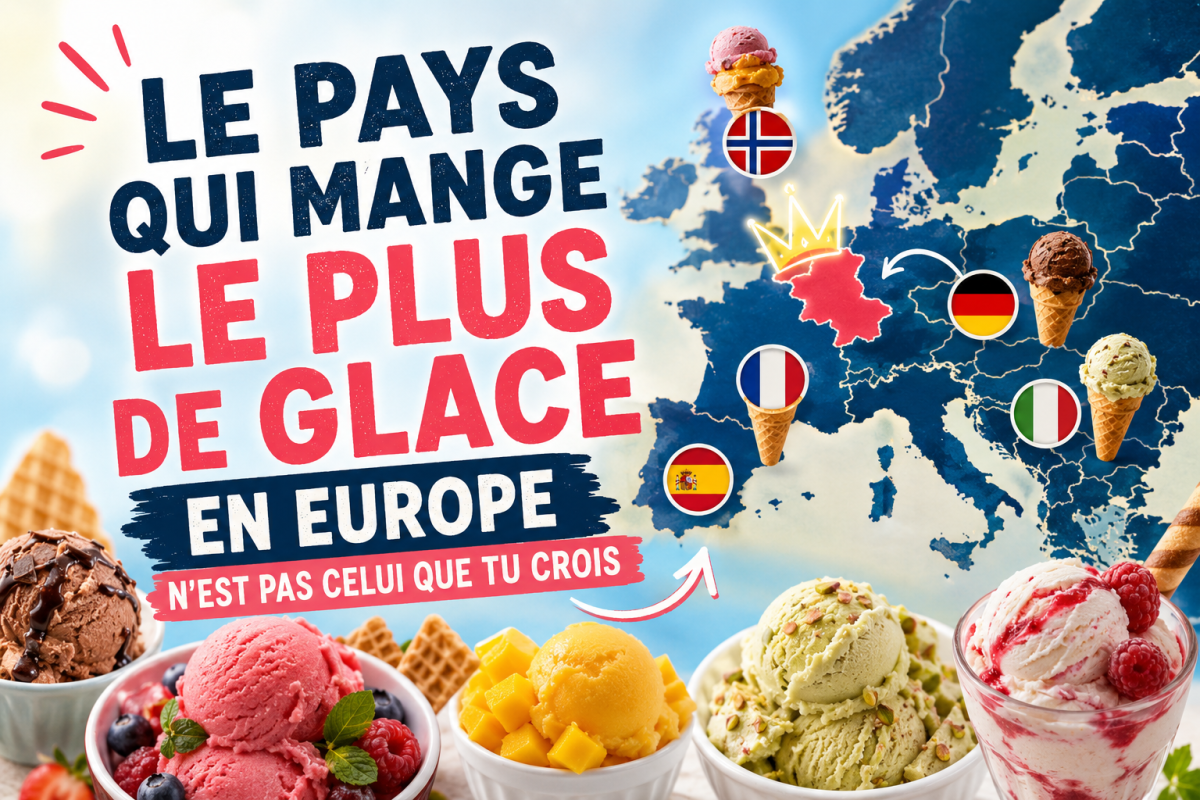
We always picture ice cream under a Mediterranean sun. In a cone in Naples, on a Spanish seaside, in a Roman gelateria. This image is so ingrained that it seems obvious. Yet it's completely wrong—and the European ranking of the biggest ice cream consumers is there to prove it.
The Paradox of the North
Here's the surprising result: the three countries that consume the most ice cream per capita in Europe are Estonia (12.5 kilos per person per year), Belgium (11.5 kilos), and Lithuania (8.8 kilos). Neither Italy, nor Spain, nor Greece make the podium. The countries that have made ice cream a way of life, a cultural institution, a cornerstone of their cuisine exported worldwide—these countries are outdone by the Baltic nations and a flat country that's rainy half the year.
This paradox deserves closer examination because it reveals something essential about our relationship with ice cream. In Italy or Spain, ice cream is linked to the heat. We eat it because it's hot, because we're on vacation, because we pass by a delicious-smelling gelateria. It's a consumption triggered by the environment. In Estonia or Belgium, ice cream has long since transcended the weather. We eat it because we like it, period. It's a consumption rooted in culture, not in the thermometer—and it's this type of consumption that generates the largest volumes.
In France, ice cream no longer has a season
France is following a similar trajectory, although it has not yet reached these levels of consumption. According to sector data reported by TF1 in April 2026, 40% of ice cream consumed in France is consumed outside of the summer season.. Autumn, winter, spring — ice has crept into all seasons, all contexts, all times of day. It is no longer reserved for sweltering afternoons.
The sector itself reflects this trend. Timothée Ara-Jeantet, Secretary General of the French Ice Cream Manufacturers Association, confirms that innovation follows this logic: the top three preferred formats—sticks, cones, and tubs—remain unchanged, but smaller and snack-sized formats are gaining ground in consumer habits. Around fifty new products are expected on store shelves in 2026, following a very successful 2025 with 61 new releases.
The small frozen treat, a symbol of an era
Perhaps the most telling sign of what ice cream is becoming in France is the rise of bite-sized frozen treats. Nearly 9 million units were consumed in 2025, at 40 or 60 cents each. Fruit, caramel, pure chocolate—these are formats that can be eaten standing up, without a plate, and without any special occasion.
This success says something specific about the economic and social context: in a time of tight budgets, ice cream remains one of the few small pleasures accessible without guilt. We can't treat ourselves to a restaurant every night, but we can enjoy a bite for 50 cents. The democratization of frozen pleasure comes through mini-sized portions—and the industry has understood this very well.
What the European ranking doesn't tell you
What consumption figures don't capture is the quality and the nature of what we eat. Consuming 12.5 kilos of ice cream per year tells us nothing about what that ice cream contains—its ingredients, its sugar, its additives, its origin. And that's where the most interesting trends of 2026 emerge.
In Germany, which remains the leading ice cream producer in the European Union with 607 million liters produced in 2024, industry professionals are seeing growing demand for fruity and vegan varieties, sorbets, and pistachio-based creations. According to the Italian Ice Cream Makers Association, pistachio is dethroning classics that have been established for decades—partly driven by the viral trend of Dubai chocolate, which has sparked a surge in interest in rich, premium flavors. In 2026, the flavor of the year chosen by Italian ice cream makers is "Pinocchio"—a combination of milk ice cream, strawberry ice cream, and chocolate-dipped breadsticks—designed as much for its narrative as for its taste.
Ice cream is increasingly seen as a product with a history, an identity, and traceability. Consumers want to know what they're eating. And more and more, some prefer to make it themselves.
The rise of homemade ice cream: a logical response
There's a coherence between all these signals. Ice cream is moving beyond seasonality; it's becoming a year-round treat. It's becoming more premium, with a growing demand for fruity, light, sugar-free, and vegan varieties. People are paying more attention to ingredients, want transparency, and are looking for personalized alternatives to what the industry offers.
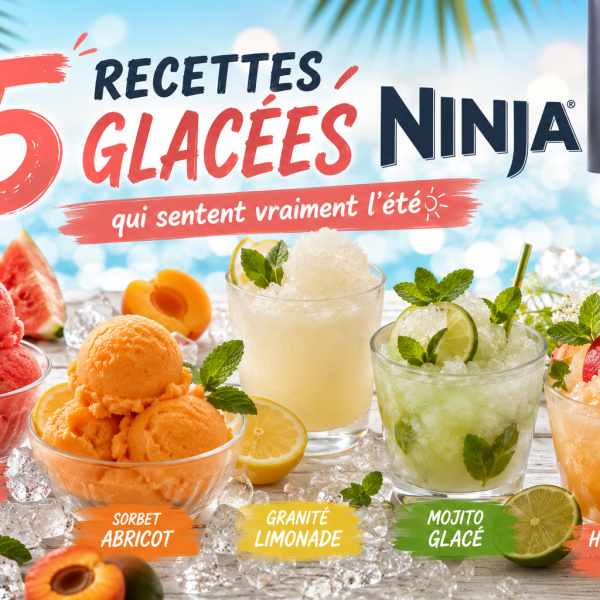
Homemade ice cream makers—and the Ninja CREAMi in particular—perfectly meet this need. Not as a substitute for store-bought ice cream, but as a solution to what commercial ice cream stores simply can't offer: ice cream made with your own fruit, your own sugar level, your own protein, vegan, or lactose-free recipe. The tub, the most popular format in France, is precisely the CREAMi's format. Except that with this tub, you know exactly what's in it.
Estonia consumes 12.5 kilos of ice cream per person per year. It's not an obsession—it's a culture. And this culture, that of ice cream as a constant and unashamed pleasure, is spreading throughout Europe.


 French
 English
 German
 Italian
 Spanish
 Portuguese
 Dutch
 Danish
 Arabic
 Swedish
 Polish
 Turkish
Your turn!